


Top things to know
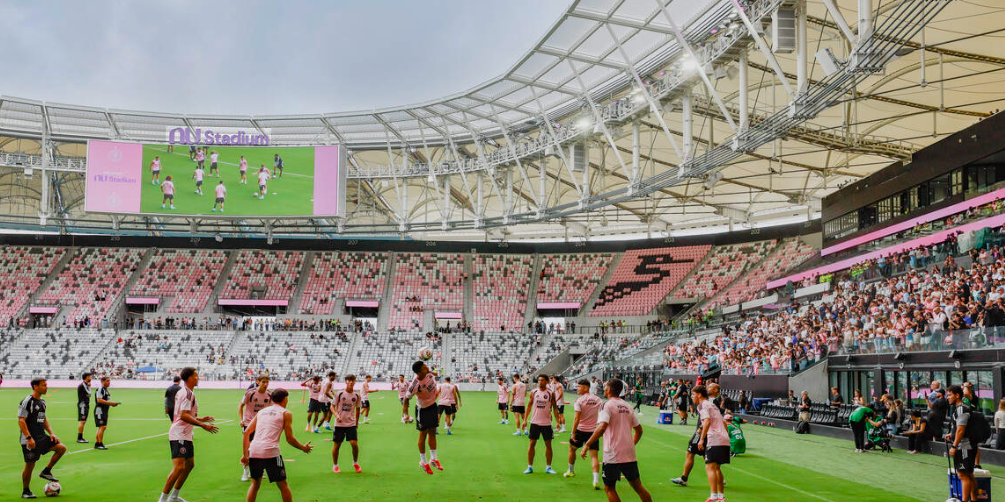
- CONCACAF approved Haiti's request to move the 14 November Nations League quarter-final first leg against the USA from Kingston, Jamaica, to Nu Stadium in Miami under an "exceptional hosting arrangement".
- Haiti has not played a home match inside its borders since July 2021; the United Nations estimates 90 per cent of Port-au-Prince, including the national stadium, is controlled by violent gangs.
- Haitian Football Federation President Monique André said Miami was a natural choice because South Florida hosts one of the largest Haitian communities outside Haiti.
- Nu Stadium drew a sold-out crowd of 26,700 for Haiti's pre-World Cup friendly against Peru in June, far above the average of 297 at Sabina Park.
- The second leg is scheduled for 17 November at TQL Stadium in Cincinnati; CONCACAF said the hosting flexibility will remain while the security situation persists and may be amended or withdrawn at any time.
Haiti's designated home match against the United States in the CONCACAF Nations League quarter-finals has been relocated from Kingston, Jamaica, to Nu Stadium in Miami, the confederation announced on Thursday, approving what it called an "exceptional hosting arrangement" requested by the Haitian Football Federation.
The first leg is scheduled for 14 November, with the return leg set for 17 November at TQL Stadium in Cincinnati. The fixture had been booked for Sabina Park in Kingston, the cricket ground that has served as a stand-in venue for Haiti's home qualifiers. According to the Guardian, the Nations League format had slated Curaçao and Jamaica to host matches on the same night, pushing Haiti to Sabina Park, where its two previous qualifiers drew an average of 297 spectators.
The relocation reflects a security crisis that has kept Haiti from staging international football at home since July 2021. The Guardian reported that the United Nations estimates 90 per cent of Port-au-Prince, including the national stadium, is controlled by violent gangs. Haiti played its 2026 World Cup qualifiers in Curaçao, Aruba and Barbados, and its return to the World Cup this summer — a first appearance since 1974 — unfolded entirely on foreign soil.
Haitian Football Federation President Monique André said the choice of Miami was driven by demographics as much as logistics. "Miami was a natural choice for us. South Florida is home to one of the largest Haitian communities outside of Haiti, and we experienced that connection firsthand when the Grenadiers played at Nu Stadium earlier this year, just before our return to the World Cup," she said, according to Caribbean Media Corporation. André said the federation approached CONCACAF because the security situation continued to prevent the team from playing international matches in the country.
Nu Stadium hosted the venue's first international friendly in June, a pre-World Cup clash with Peru played before a sold-out crowd of 26,700 — a figure that dwarfed the turnouts at Sabina Park. The Guardian reported that Miami has by far the largest population of Haitians and their descendants in the United States, with nearly half a million concentrated predominantly in South Florida.
André framed the match as a continuation of a landmark year for Haitian football. "We are especially excited because of what this moment represents; 2026 has already been an extraordinary year for Haitian football," she said. "We returned to the World Cup for only the second time in our history, 52 years after 1974, and throughout that journey we saw again how deeply the national team brings Haitians together, both at home and across the diaspora." She added: "Now, just a few months later, we have the opportunity to play an important competitive match in Miami, as the home-designated team, in front of a community that has supported the Grenadiers so passionately. We hope Haitians throughout South Florida will come out in numbers, fill the stadium with our colors and our flags, and give our players the feeling and energy of playing at home."
At the World Cup, Haiti lost all three group matches against Morocco, Scotland and Brazil but drew strong support from fans in Massachusetts, Philadelphia and Atlanta, the Guardian reported. The United States has won four of the six meetings between the teams this century, with the other two drawn.
CONCACAF said the flexibility would remain in place "for as long as the security situation in Haiti persists." Haiti and clubs based in the country will need approval from the confederation for each match they seek to play in the territory of its opponents — a separate arrangement from the neutral sites previously booked. The confederation stipulated that the measure "may be amended or withdrawn by the Concacaf Council at any time."
The decision leaves open questions about Haiti's longer-term hosting arrangements, including whether future home fixtures will continue to be approved on a case-by-case basis and how the federation will manage scheduling if the security situation does not improve. For now, the Grenadiers will play a competitive home match on US soil, in a city chosen for its diaspora rather than its distance from the crisis at home.