


Top things to know
- The U.S. has suspended several firms, including Indian IT companies, from the PERM programme as part of a crackdown on employment-based immigration.
- A $100,000 H-1B visa fee imposed in September 2025 was later struck down by federal courts in June 2026.
- H-1B registrations fell after the fee was imposed, according to U.S. Citizenship and Immigration Services data.
- The targeted companies filed about 2,000 PERM applications this year, less than 2% of all filings.
- More than 20,000 Indian professionals with advanced degrees applied for U.S. citizenship each year since 2014 via I-140 applications.
- A Congressional Budget Office analysis estimated immigration would add $1.2 trillion in federal revenues over 2024-2034.
The United States has suspended several companies, including major Indian IT firms, from the Permanent Labor Certification (PERM) programme, the latest step in a broader crackdown on employment-based immigration that analysts say could reduce the country's access to skilled workers and prove counterproductive over time.
The firms affected include Microsoft, Adobe, Infosys, TCS, Wipro, HCL (America/Tech), Cognizant and Capgemini, according to data reported by The Hindu. The suspension follows a proclamation signed by President Donald Trump last year that sought to raise the H-1B visa fee to $100,000, a measure the report says was intended to push companies toward hiring more U.S. workers. That fee was later struck down by federal courts in June 2026.
Data from U.S. Citizenship and Immigration Services cited in the report show that H-1B registrations fell after the $100,000 fee was imposed in September 2025. The report also notes that the targeted companies accounted for less than 10% of all PERM applications filed, with their share dropping to about 4% in 2025, the first year of the second Trump administration. So far this year, those companies filed roughly 2,000 PERM applications, less than 2% of all applications filed by employers.
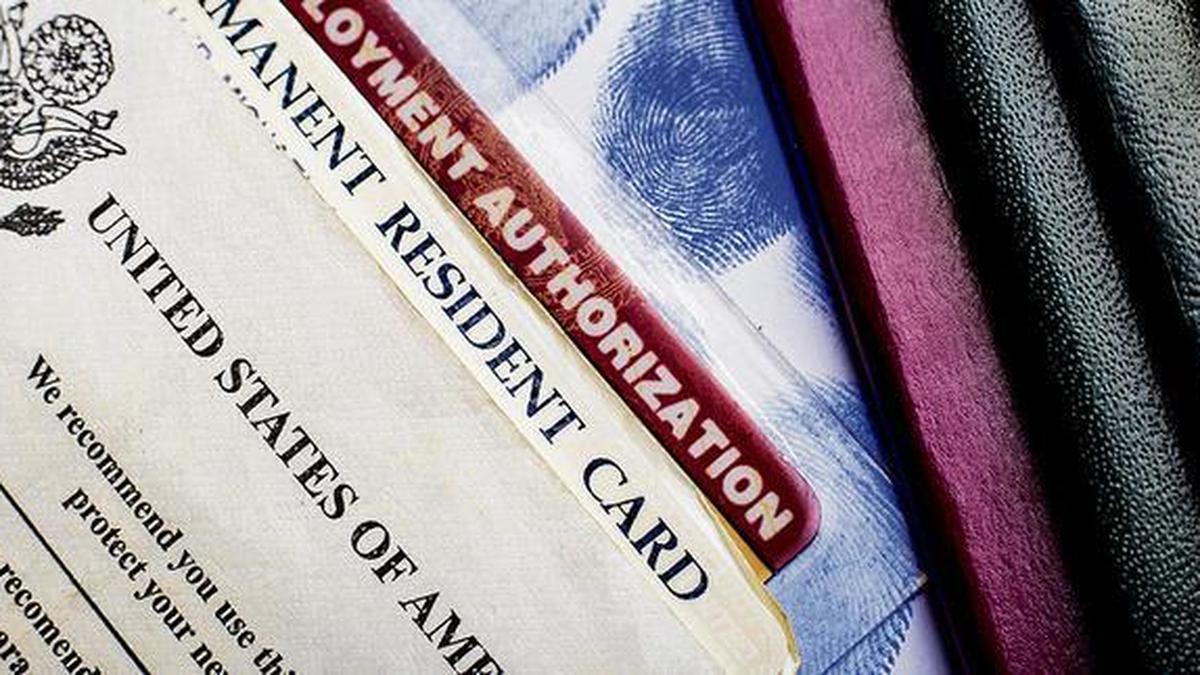
Employment-based migration, particularly the H-1B programme, allows highly skilled immigrant workers to take temporary employment in the U.S., with later processes such as employer-sponsored PERM certification and Form I-140 paving the way for permanent residency through a green card. The report states that more than 1 million people obtained permanent residency in the U.S. each year, but the share using the employment route has been decreasing, with green cards largely obtained by immediate relatives of U.S. citizens and family-sponsored preferences.
Indians accounted for more than half of the PERM applications, according to the report. An analysis of I-140 visa applications filed with USCIS shows that more than 20,000 Indian professionals with advanced degrees applied for citizenship in the U.S. each year since 2014. The eligibility criteria require either a U.S. master's degree or higher (or foreign equivalent) or a U.S. bachelor's degree (or foreign equivalent) followed by at least five years of work experience in the specialisation. The report notes that in qualifying for eligibility, these applicants contribute to the U.S. economy as both students and employees.
The report also points to a Congressional Budget Office analysis from July 2024 estimating that the immigration surge would add $1.2 trillion in federal revenues over the 2024-2034 period, largely due to income and payroll taxes. It warns that in the long term, an increased crackdown on migrant workers could risk investments and activities by corporations outside the U.S.
The data for the report's charts were sourced from U.S. Citizenship and Immigration Services and the Congressional Budget Office. The report was published on October 21, 2026.