


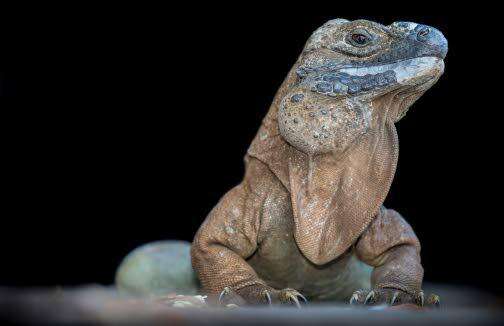
Top things to know
- The 1,000th head-started Jamaican Rock Iguana will be released into the Hellshire Hills, St Catherine, on Saturday, November 14.
- The release is coordinated by the National Environment and Planning Agency (NEPA) with local and international partners.
- Minister Matthew Samuda said the species was declared extinct in 1948 and rediscovered in 1990.
- A total of 114 iguanas will be released on Saturday, taking the programme past 1,000 animals, with 973 already released.
- The Hope Zoo head-start programme cares for approximately 250 to 300 juvenile iguanas at a time.
Jamaica will mark a conservation milestone on Saturday, November 14, when the 1,000th head-started Jamaican Rock Iguana (Cyclura collei) is returned to its native habitat in the Hellshire Hills, St Catherine.The release is coordinated by the National Environment and Planning Agency (NEPA) with local and international partners, and forms part of a recovery programme that Minister of Water, Environment and Climate Change Matthew Samuda said spans more than 30 years of scientific research, habitat management, captive rearing, predator control and species reintroduction.Samuda, who spoke at the opening ceremony of the International Union for Conservation of Nature (IUCN) Species Survival Commission (SSC) Iguana Specialist Group Annual Meeting at The Jamaica Pegasus hotel in New Kingston on Monday, noted that the species was declared extinct in 1948 before being rediscovered in 1990.“This... is a big deal. We should recall that the Jamaica Rock Iguana was genuinely thought to be extinct and declared so in 1948 before it was rediscovered in 1990,” he said. “The release of the 1,000th Jamaican iguana is not simply a numerical achievement. Each iguana returned to its natural habitat represents years of scientific effort, careful management and the unwavering commitment of individuals and institutions who refuse to accept extinction as the final chapter in this species’ history.”At Hope Zoo, the head-start programme cares for approximately 250 to 300 juvenile iguanas, raising them in a protected environment until they are large enough to have a better chance of surviving in the wild. A total of 114 additional iguanas are scheduled to be released on Saturday, taking the programme beyond the 1,000-animal milestone, with 973 already released.Iguana Conservation Specialist Tandora Del Grant, who has been involved in the project since 1995, described the upcoming release as an encouraging milestone. “It’s a nice milestone. It gives us a good feeling that we are being successful and the animals in the wild are surviving and reproducing on their own,” she said. She cautioned, however, that conservation efforts must continue to prevent the population from declining again, and identified the eventual reintroduction of the iguanas to Goat Island as the next major milestone.NEPA ranger and Iguana Recovery Team member Oneil Wilson said the programme’s progress was particularly rewarding after more than seven years of involvement. “The process is very rigorous in terms of the repopulation of Jamaican rock iguana. It’s a very daunting task, but it’s rewarding,” he said.Fellow NEPA ranger Jomo Pinkney highlighted the species’ role in seed dispersal, explaining that iguanas help regenerate trees by dispersing seeds after eating fruit. The Hellshire Hills is home to the Caribbean’s largest dry forest, making that role particularly important to the area’s regeneration.